
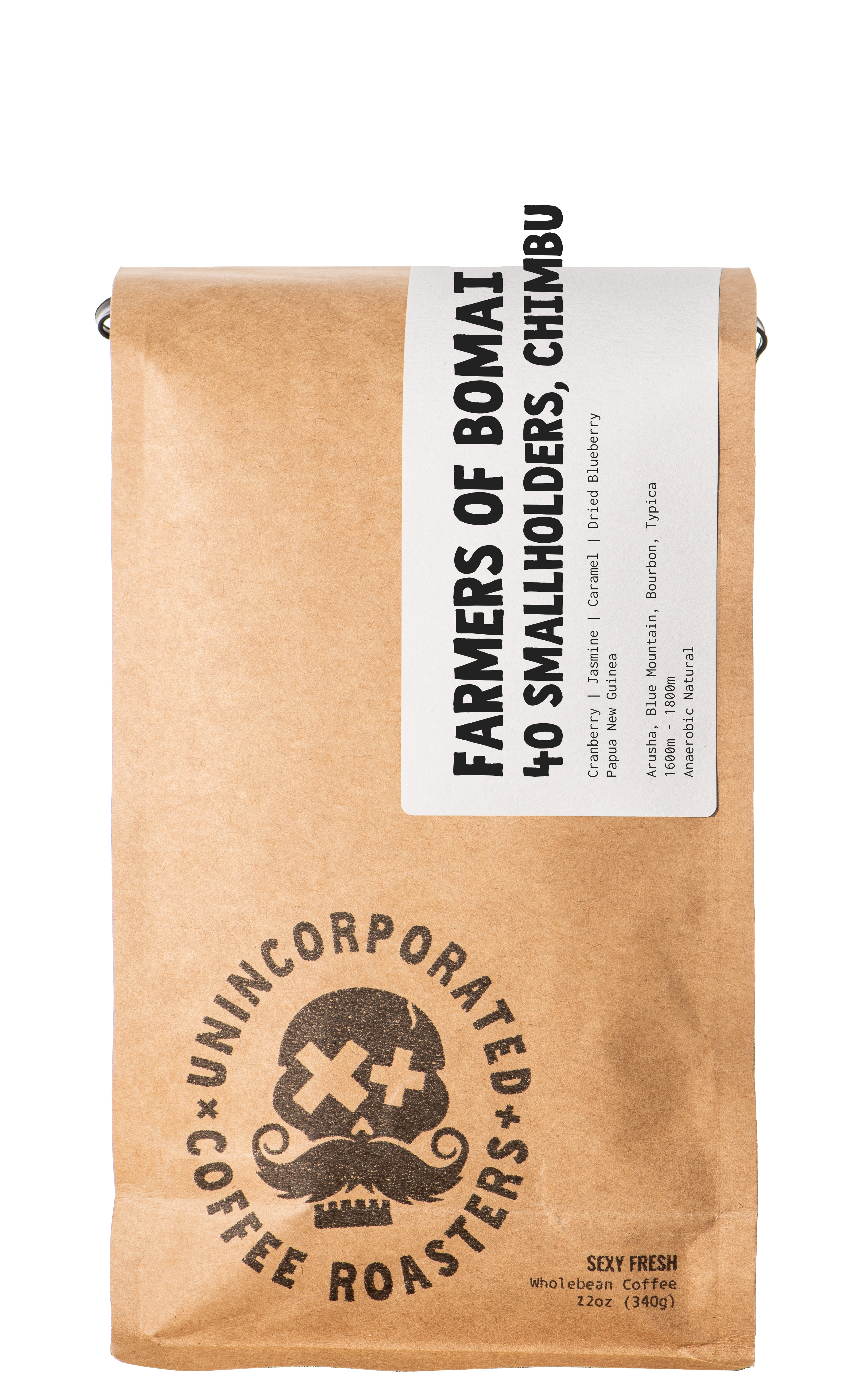
Farmers of Bomai - 40 Smallholders, Chimbu - Papua New Guinea
What makes this coffee special?
Our very first coffee from Papua New Guinea! This coffee is grown in volcanic loam, a nutrient dense soil, imbuing it will bold, complex flavor. Anaerobic natural processing gives it lots of punchy fruit flavors.
Coffee in Papua New Guinea
Papua New Guinea is a relative newcomer to the global coffee industry, despite the ideal growing characteristics of its terrain. Like many other producing countries, coffee arrived to Papua New Guinea through the country’s colonization by Europeans, which came later than most to much of Oceania. The first record of coffee in the region dates back to only to 1890. Initially, coffee farming followed the typical British colonial plantation style of growing. The first large commercial plot came about in the 1930s and was called Blue Mountain Coffee - named after the variety planted by the British in PNG originally from Jamaica. After World War II, commercial production across the country exploded, and between 1951 and 1965, the amount of coffee trees in the country grew by 3,000%.
Today, 85% of the country’s coffee is grown by smallholder living in rural areas. Most plants grown in the PNG Highlands today can be genetically traced back to the plants grown on that Blue Mountain Coffee plantation back in the 1930s.
About Sirigine Coffee Producers
Remoteness and a lack of reliable infrastructure place huge limitations on small farmers across the Highlands of Papua New Guinea. In Chimbu, the terrain is extreme. Lacking the flat plains and valleys of the surrounding areas, Chimbu instead consists of steep land in a continuous mountain range, making growing extremely difficult.
Back in 2013, a local coffee farmer named Paul Sirigine started Sirigine Coffee Producers (also known as the Bomai project) by setting up a dry mill in Goroka where local growers could more easily process their coffees. This allowed local smallholders to maintain higher quality, more transparency, and better integrity for their crops. Now, Samuel Raffana runs the dry mill and supports local farmers in implementing practices to improve the quality of their crops.
notes: cranberry, jasmine, caramel, dried blueberries
varieties: arusha, blue mountain, bourbon, typica
elevation: 1600m - 1800m
processing: anaerobic natural